






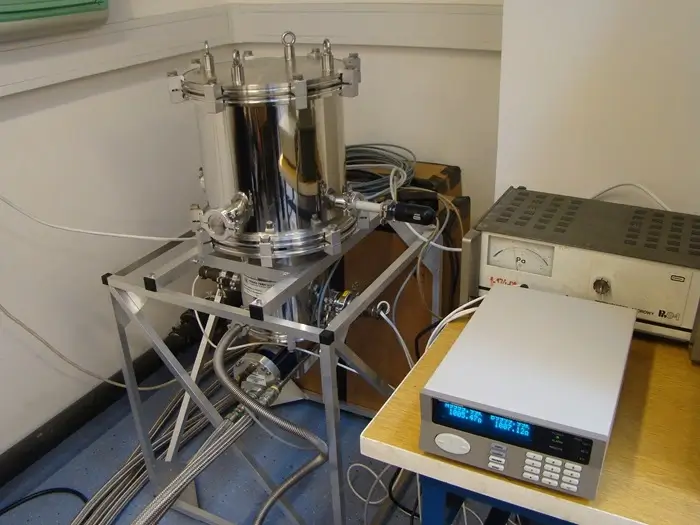
| Dimensions | Diameter: 220/320 mm, Height: 260/350 mm |
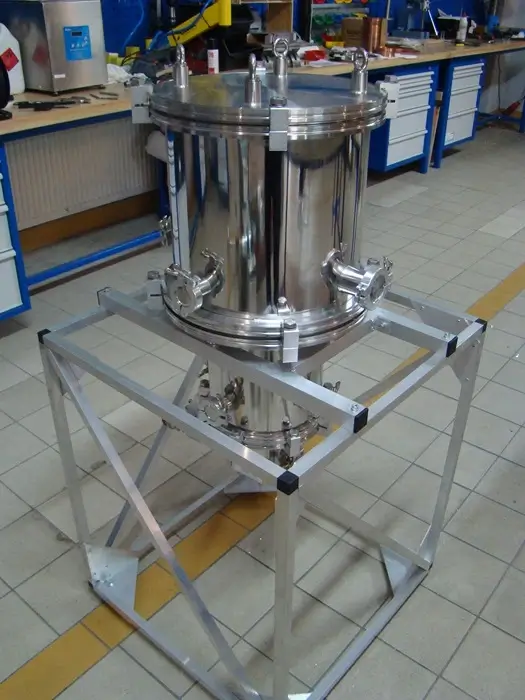
| Material | Stainless steel |
| Operating Temperature | 4.2K to 300K |
| Vacuum Level | Up to 5x10^-7 mbar |
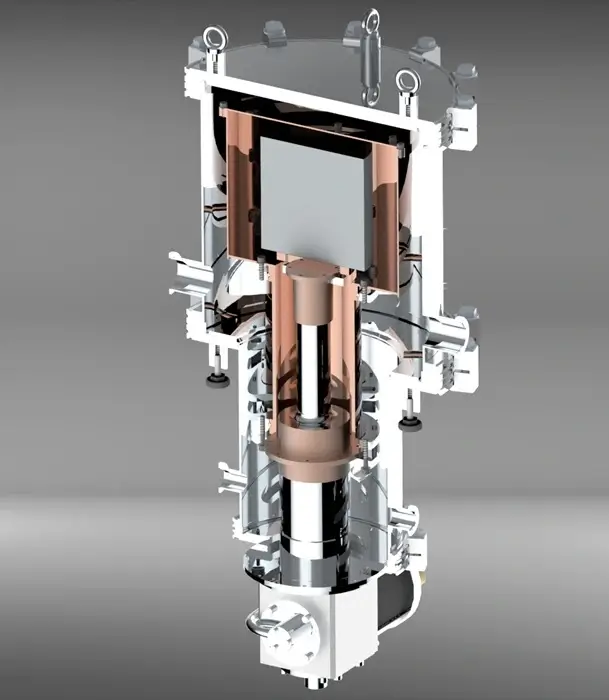
| Cooling System | Helium closed-cycle, GM cryocooler head |
Vacuum Ports: The cryostat is equipped with KF40 and KF25 ports, allowing for flexible integration with other vacuum devices and research apparatus.
Temperature Sensors: It utilizes TVO Frako-Term temperature sensors, ensuring accurate monitoring and control of the temperature inside the cryostat.
High-Current Feedthroughs: Optimized high-current feedthroughs enable electrical testing at low temperatures.
Vacuum Electrical Sockets: Thanks to vacuum electrical sockets, it is possible to safely connect and power electrical devices in controlled vacuum conditions.
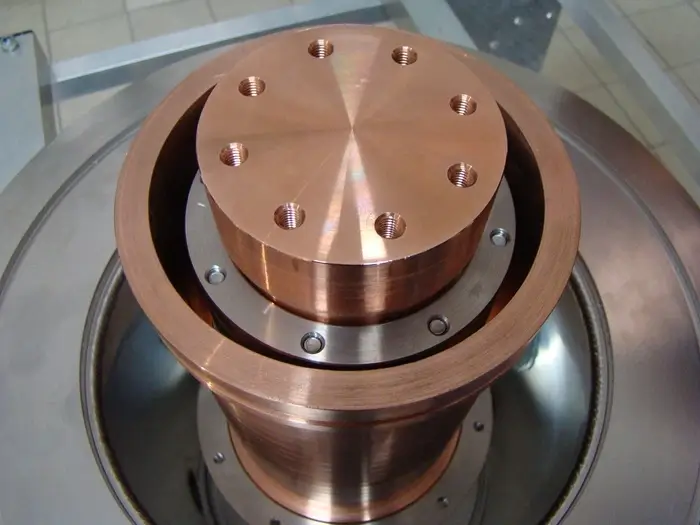
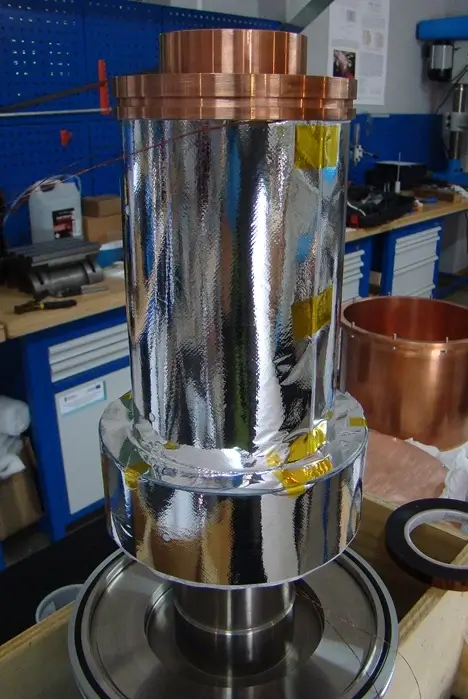
Copper Thermal Shield and MLI Insulation: The inclusion of a copper thermal shield and MLI insulation guarantees optimal cooling conditions and minimizes heat loss.
Temperature Regulation with 0.1K Stabilization: The cryostat is equipped with an advanced temperature regulation system that provides precise stabilization of the sample's temperature with an accuracy of up to 0.1K.
The cryostat for low-temperature research has found wide application in fields of science and industry where studying the properties of materials under extreme temperature conditions is crucial for the development of new technologies. Thanks to its advanced features and robust construction, this cryostat is an indispensable tool for researchers in materials science, physics, chemistry, and engineering.
